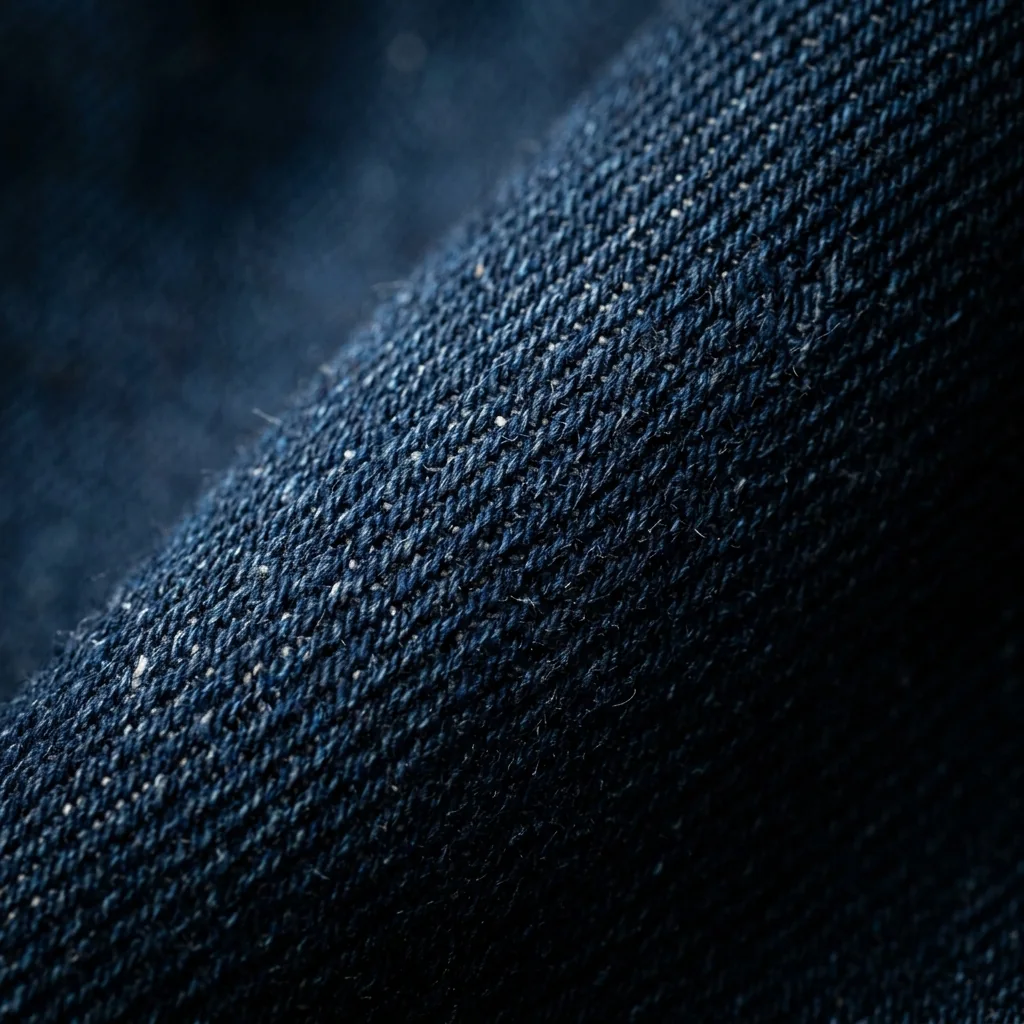
Warp, indigo and weight in denim
Denim is one of the most rule bound fabrics in weaving. The definition is simple: the warp yarns are dyed with indigo, the weft yarns are left raw white, and the cloth is woven as a warp faced twill. Those three decisions produce the look everyone recognizes, blue on the face and white on the back. They also largely determine how the fabric behaves in cutting, sewing and washing.
Warp, weft and twill direction
Classic jean denim is usually woven as a 3/1 twill, where the weft passes over one warp end in every four. Because the face is dominated by warp, the color comes from the warp while the weft stays on the back. The twill line can run right hand (Z) or left hand (S). A broken twill deliberately interrupts the diagonal and reduces the fabric's tendency to torque.
Warp and weft counts, together with ends and picks per centimeter, decide how firm the cloth feels and how well it resists tearing. Two denims at the same weight can feel completely different because of count and density. That is why construction data matters as much as weight before an order is placed.
Why indigo fades
Indigo is a vat dye with low affinity for cotton. Through repeated dips and skying steps the dye builds on the outer layer of the yarn while the core stays white. This ring dyeing is the character of denim: as the fabric abrades, the outer layer wears away, the white core shows through and the familiar wear marks appear.
The dyeing route also shows in the result. In rope dyeing the yarns pass through the vats many times in rope form, which generally gives a deeper and more even shade. In slasher dyeing the warp is dyed in sheet form on a beam, with a shorter preparation cycle. For a buyer the real question is not the name of the method but shade continuity between lots; rolls delivered against an approved shade card should stay within the same band.
What weight and finishing tell you
Denim weight is expressed in ounces per square yard. As a rough industry convention, light denims sit around 4 to 6 oz, classic jean qualities around 11 to 13 oz, and workwear and jacket denims at 14 oz and above. Heavier cloth gives more structure and durability, and is correspondingly harder to cut and sew.
Two finishing steps concern the buyer directly. Singeing removes surface hairiness and sharpens the appearance after washing. Sanforizing pre shrinks the fabric under control and reduces residual shrinkage after make up; unsanforized raw denim shrinks noticeably on the first wash. If the natural torque of the twill is not balanced by counter skew, it reappears as leg twist in the washed garment. In stretch denim the elastane usually sits in the weft, and recovery after extension matters more than the stretch percentage itself.
Samples and a wash trial in denim
At the sample stage, target weight, construction, shade reference and end use need to be settled. Shade continuity is the most frequently disputed point in denim, so the shade card and the acceptable deviation should be agreed before the order.
We recommend running your own wash trial before bulk production. The real behavior of denim shows up not on the loom but after washing; shrinkage, shade and handle can only be judged at that point.