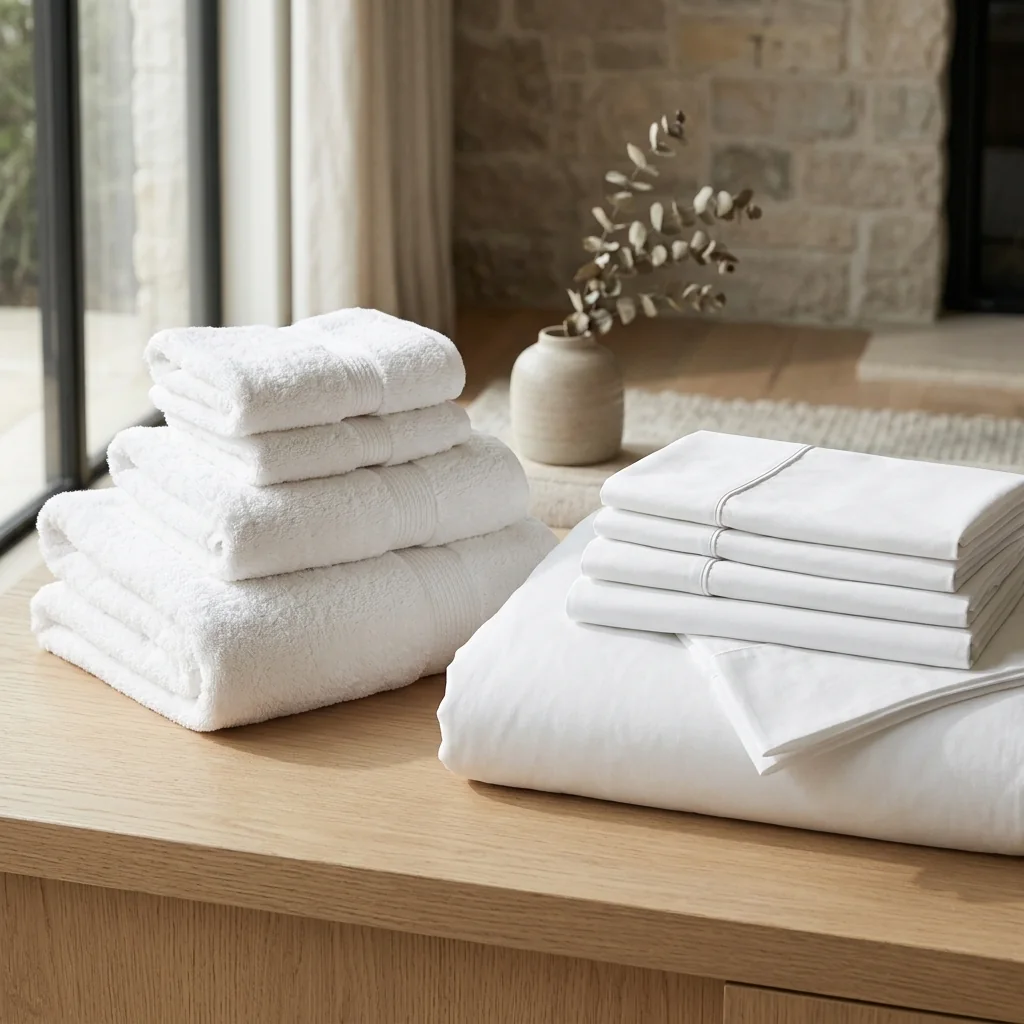
Weight, pile and thread count in towels and bed linen
Home textiles are where cotton comes closest to the end user. The buyer is not really buying a yarn count, they are buying how the fabric looks and feels after the first wash. When the specification is not defined step by step, results drift from lot to lot.
Towel weight, pile and twist
The basic measure of a towel is its weight in grams per square meter. Across the market, bath towels range roughly from 300 to 700 g/m², and hotel programs commonly sit between 450 and 550. Weight alone is not a full description, because a towel has two yarn systems: the ground warp and weft forming the base cloth, and the pile yarn on the surface. How much of that weight goes into the pile decides absorbency and handle.
Pile twist is the second critical parameter. Low twist picks up water faster and feels softer, while higher twist sheds less under repeated washing. In terry the pile loops are left uncut, while in velour the tips are sheared for a velvet-like surface. Shearing softens the handle but reduces the absorbing surface, which is why a hotel bath towel and a beach towel are specified differently.
Weave type and thread count in bed linen
Bed linen names usually describe the weave. Ranforce is a tightly woven plain weave with a crisp hand that copes well with industrial laundering. Percale is also plain weave, but finer yarns at higher density give a cool matte surface. Sateen lets warp yarns float over several picks, which is where its shine and drape come from.
Thread count is the sum of warp and weft yarns in one square inch. Buyers should read that figure carefully: where plied yarns are used, it is sometimes declared at two or three times its real value. Ask for the yarn count alongside it, and whether the yarn is single or plied. At the same count, a percale in Ne 40 and a ranforce in Ne 20 are two different products.
What the buyer should ask
Most complaints in home textiles surface after the first wash. Cotton fabric without a shrink control finish pulls in noticeably, so the contract should state whether dimensional tolerances are measured before or after washing. Weight tolerance, hem construction and duvet cover closure belong in the specification from the start.
Color fastness deserves separate attention in hotel and hospital textiles. Industrial laundries run hot, use alkaline detergent and often chlorine bleach. A fabric with good wash and rubbing fastness can still fade under chlorine, so chlorine fastness is worth asking about on institutional orders. Looking at a sample is not enough, running it through the buyer's own wash cycle is sounder.
Hotel and contract orders
In home textiles, most of the decisions that set quality are made at the yarn and construction stage. Weight and pile height in towels, and percale, sateen or ranforce construction and thread count in bed linen, directly determine how long the product lasts.
On hotel and contract orders we prefer to define the product against the buyer's actual laundry conditions, since industrial washing is far more demanding than domestic washing. That way weight, dimensions, hem construction and fastness expectations are settled before the order.