Who works in our fields and plants
For a few years now, European companies buying cotton have raised labor within the first half of an order conversation. The reason is tighter supply chain legislation: a buyer is now held responsible not only for its own factory but for the chain that supplies it. The question is therefore not personal, it comes from the buyer's own legal obligation, and it is a fair one to ask.
This article explains how the work is organized on our side.
The harvest is mechanized
The real source of the labor question in cotton is hand picking. Manual harvest requires bringing large numbers of people into the fields within a short season, which makes it the hardest stage to supervise, and most of the debate in the sector comes from there.
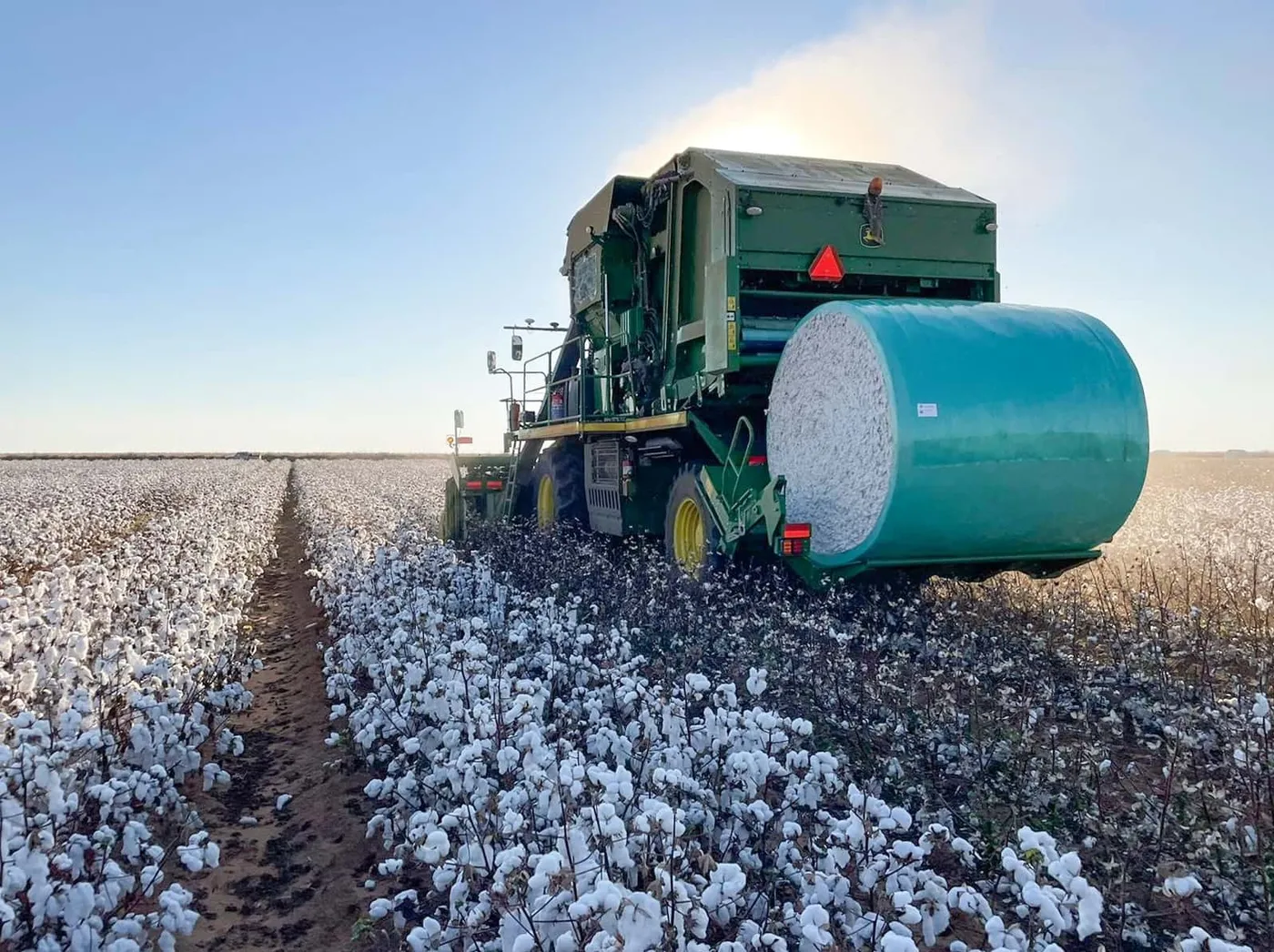
Our harvest is mechanized. The number of people in the field is limited to a small crew operating the machines and managing the process. This is less a policy than the production method itself: mechanized harvest also means the fiber waits less in the field and short fiber content stays lower. The choice we made for quality answers the labor question on its own.
Employment is registered, age is documented
Employing children is prohibited. That is not a rule we set, it is law that must be followed. Everyone working in the plant and in the fields is employed on the books, and because registration is done against identity documents, age is documented at the moment of hiring. The records that have to be kept are themselves a form of evidence.
We do not think it is right to build an inflated pledge out of this. Presenting something the law already requires as an achievement would be a way of not taking the subject seriously.
Come and see
What a supplier says about labor only means something if it can be seen on site. Our plant and warehouses are open to visitors. A buyer at the sample or pricing stage who wants to see where production happens can arrange a visit, and during the season you can see the fields as well.
We also work with buyers who want to run their own review process. The buyer decides who carries it out and what it covers; we provide the access. From our point of view this is the soundest route: you rely on what you have seen yourself rather than on what someone else has said on your behalf.
If your supply chain documentation requires a particular record or written statement, tell us which one and we can work out together how to meet it.