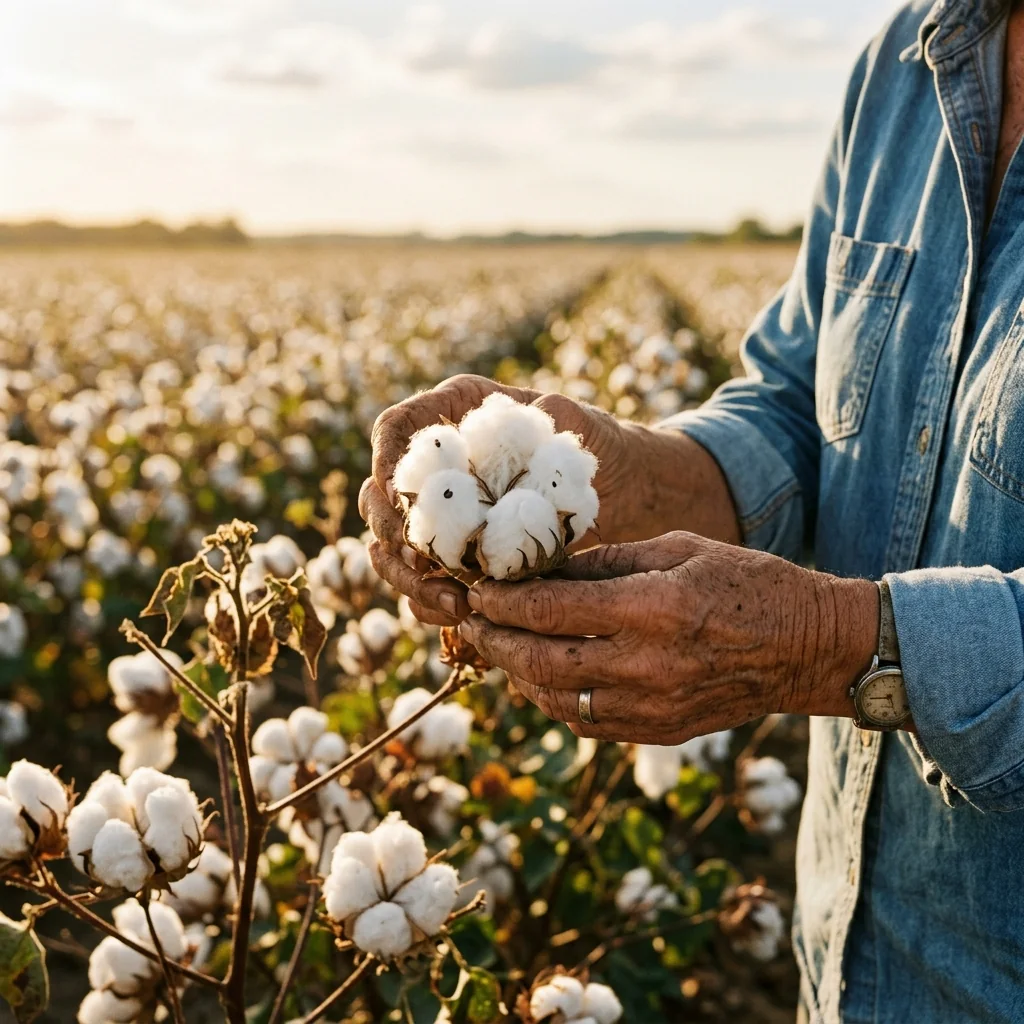
What to look for in raw cotton: staple length, micronaire and the role of ginning
Raw cotton is the first link in the textile chain and, in practice, the most decisive one. The length, fineness and strength of the fiber inside a bale largely determine what yarn count can be spun from that lot, how many ends will break in spinning, and how the finished fabric will feel. Buying cotton is therefore less a price negotiation than a technical matching exercise: finding the fiber that suits your spinning system and your end product.
What the fiber measurements mean
The first parameter is staple length, usually reported as upper half mean length in millimeters or inches. Longer staple reaches a given strength with less twist, which allows finer counts and a softer handle. The second is micronaire, a single figure that reflects fineness and maturity together. Low micronaire usually indicates immature fiber: dye uptake becomes uneven and neps increase. High micronaire means coarse fiber, fewer fibers in the yarn cross section and more irregularity.
Strength in g/tex, the uniformity index and short fiber content deserve equal attention. A lot with high short fiber content can show a respectable average length on paper and still leave more waste at carding and drawing, along with more ends down in spinning. Color grade and leaf or trash content affect both the cleaning load and the whiteness that can be reached after bleaching.
Ginning and baling, where quality is kept or lost
However good the fiber is in the field, poor ginning lowers quality in a way that cannot be recovered later. Over drying seed cotton makes the fiber brittle and raises both short fiber content and nep count. Saw ginning is fast but harder on the fiber, while roller ginning preserves length better. Moisture at baling matters just as much: a bale pressed too wet can heat in storage and discolor, while fiber that is too dry builds static and dust in the blowroom.
What a buyer should pin down
The question worth asking first is whether the sample and the shipment come from the same lot. Without lot numbers and bale level traceability, a quality report on its own says very little. Contracts should state not only target values for staple length, micronaire and strength, but also the acceptable range around each of them. Contamination risk deserves a direct question too: polypropylene fibers from harvest sacks and twine are among the most expensive defects in the chain, because they usually surface only after dyeing.
Raw cotton at ETEX
Our raw cotton grows on the irrigated plains of Turkmenistan, where summers are long and hot. We select, gin and bale close to the fields, so the fiber travels the shortest possible route into the bale. Lots are classed for color, cleanliness and staple before they leave the warehouse.
If you want to discuss which lot suits a particular spinning system or target count, we can respond with samples and lot data. Getting the match right in cotton makes every stage that follows easier.