Cotton waste: where each grade comes from and what buyers should check
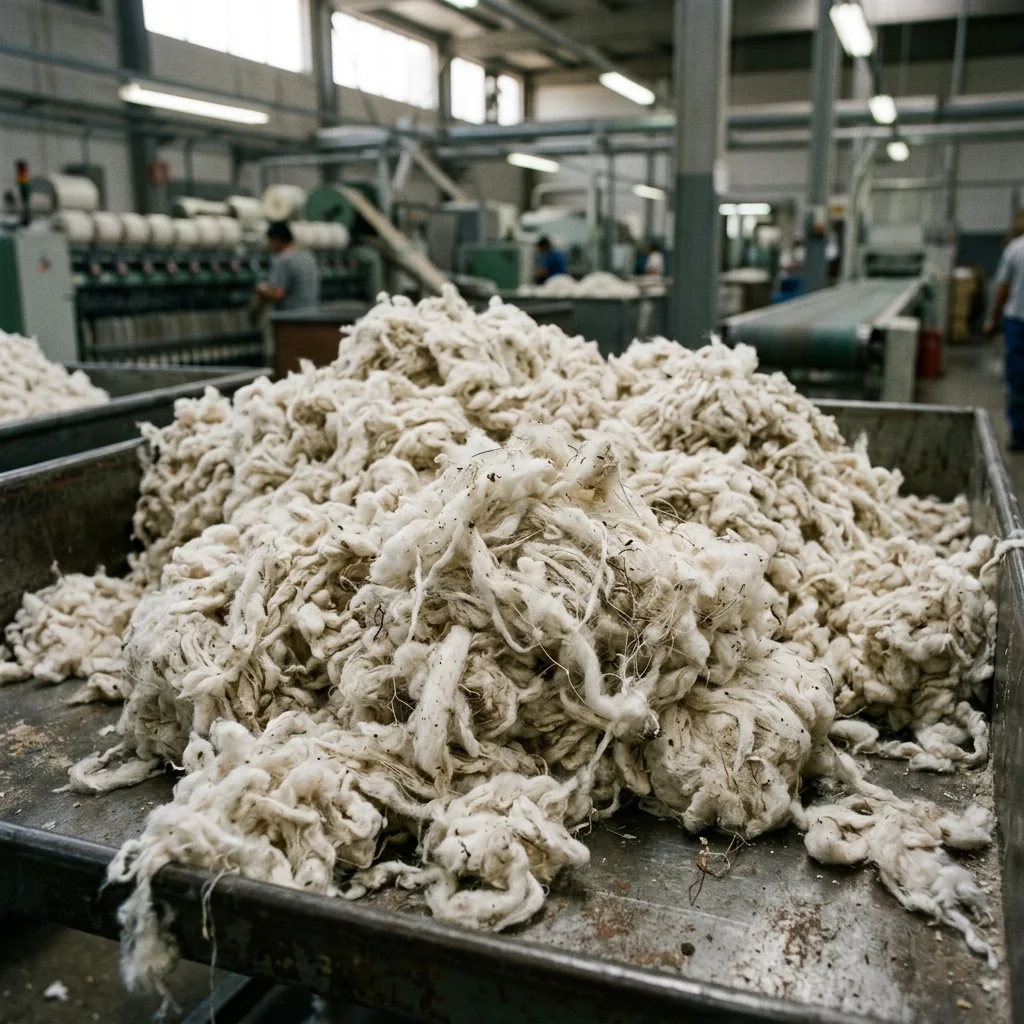
Cotton waste is a by-product that appears at every stage of the line, from ginning through to spinning. In trade it is usually sold under a single name, yet fiber length, trash content and end use change completely depending on which machine it came off. Sorted properly, waste is not a disposal problem but a raw material with its own price and its own buyers.
The stage it comes from defines the grade
Blowroom waste is separated on the line where bales are opened and given their first cleaning. Seed coat fragments, leaf trash and dust run high in it, and the share of usable fiber is lower than in the other types. That is why it goes into stuffing and insulation, and to recyclers who put the material through a re-cleaning line first. Its price is discussed directly in terms of lint content.
Waste taken off the card and the comber is noticeably cleaner. Card flat strips and comber noil are often offered under the same heading even though they are different materials. Comber noil is short in staple, because it is made up of the fibers the comber sets aside as too short to spin, but it is clean, which is why it finds a home in hydrophilic cotton and nonwoven production. Asking which machine the waste actually came off is a one line question, and it explains most of the gap between two offers.
Yarn waste and recovery
Yarn waste is sorted from the pneumafil collected at the suction system of the ring frame, together with bobbin and fabric offcuts. Because staple length and strength are relatively preserved, it goes into coarse count yarn on open-end systems, into blanket and mop yarn, and into filling material. The clean, highly absorbent fraction is used as wiping cotton for industrial machine cleaning, where what matters is oil holding capacity and the absence of synthetic fiber, since synthetics pick up neither oil nor water.
What a buyer should check
The first three items are lint content, trash content and moisture. Waste is sold by weight, so moisture goes straight into the price, and in a tightly pressed bale it also causes yellowing and mold. Commercial regain for cotton is taken at around 8.5 percent, and asking for a reading from the bale at handover is a reasonable request.
The fourth is contamination, and for a recycler it is the most expensive item on the list. Polypropylene twine from packaging, sacking fiber, colored synthetic specks and pieces of plastic strapping will show up in the yarn and in the fabric if they are not pulled out during sorting, and dyeing will not cover them. The fifth is bale standard: a consistent bale weight, even pressing and a clear grade document describing the lot are things to settle at the order stage, not when the goods arrive.
The waste grades ETEX supplies
We work with three items: carding waste, blowroom waste and yarn waste (pneumafil). These come from different points in the chain described above and differ in fiber length and cleanliness, which is why they are collected and kept apart. Not mixing material from different lines is what keeps the composition from drifting between deliveries.
Sorted waste is pressed into dense, standard bales and shipped with clear quality documentation. If you are looking for a particular lint content, trash grade or bale size, the fastest route is to discuss it with a sample and lot data.